All posts by Jeremy Albright

Unknown's avatar

About Jeremy Albright

Avid military historian and collector, focusing on Global War on Terror. Also a volunteer at American Armory Museum (as Desert Storm-GWOT exhibit specialist and Graphic Designer)

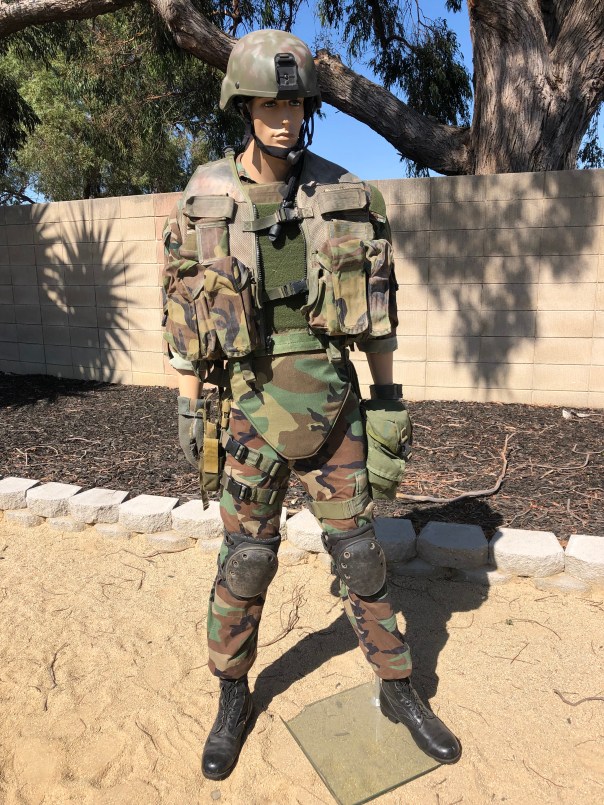
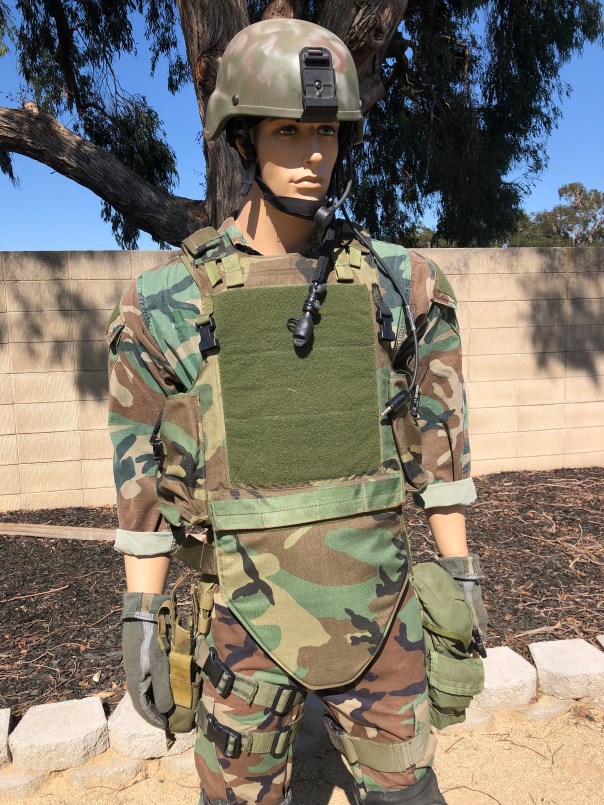
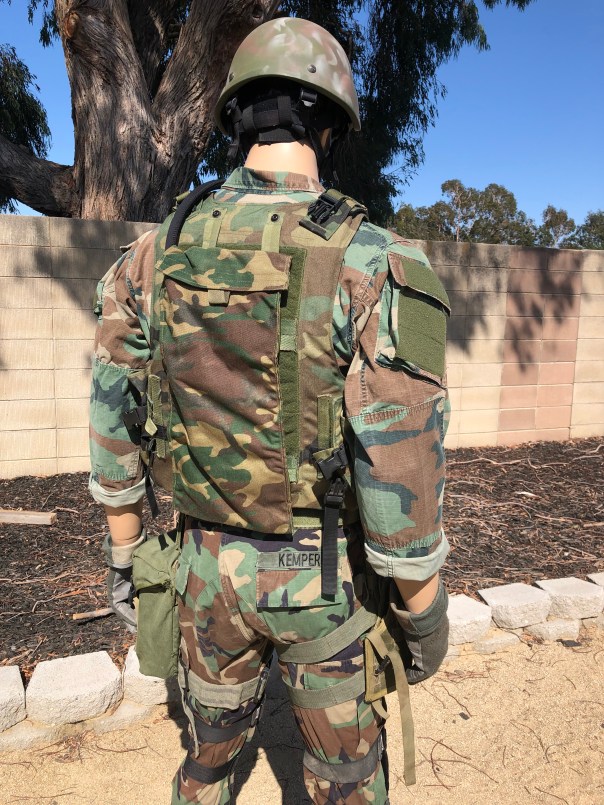
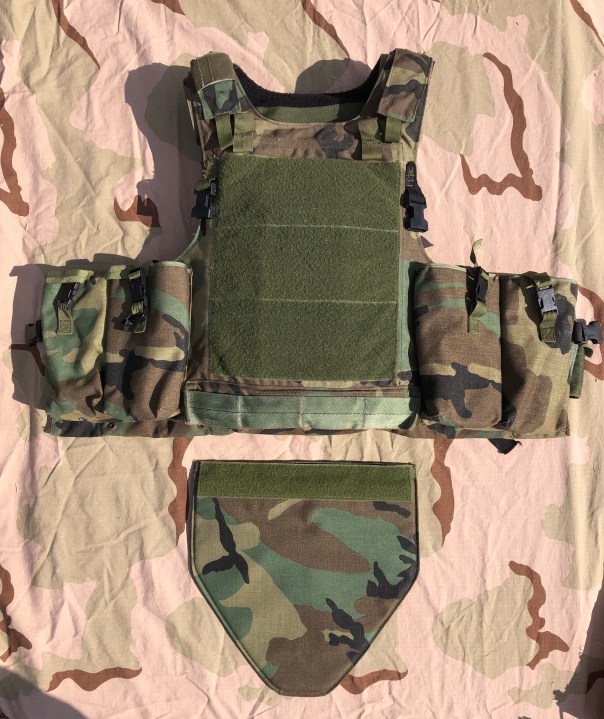
PBPV- Personal Ballistic Protective Vest

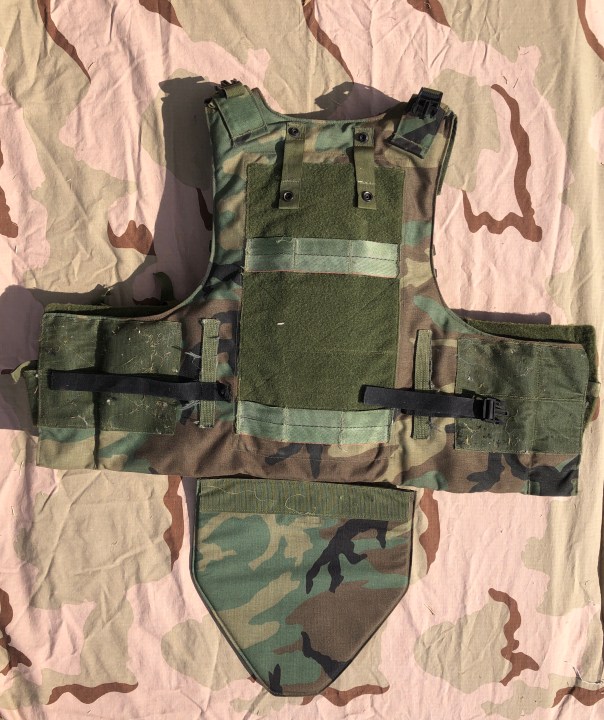
The Personal Ballistic Protective Vest or PBPV for short, was one of the most advanced body armor designed in late 1990’s, manufactured by Pointblank Body Armor, inc. It has soft armor inserts and six hard plates. It also has optional groin protector.

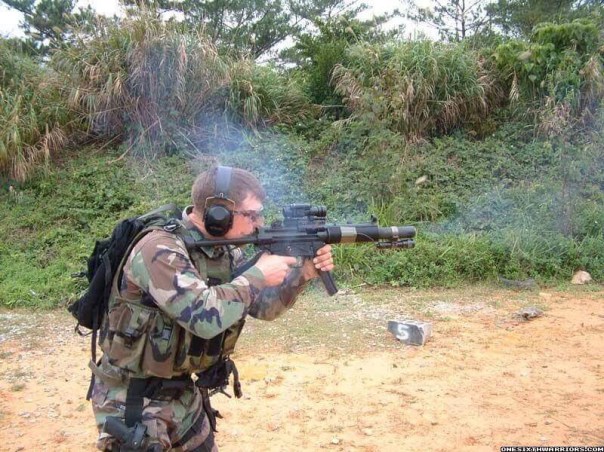
The PBPV was issued only to US. Army’s Direct Action/ Counter-Terrorism (DA/CT) units such as Delta Force and Special Forces Groups’ Combatant Commanders In-extremis Force (CIF) companies.

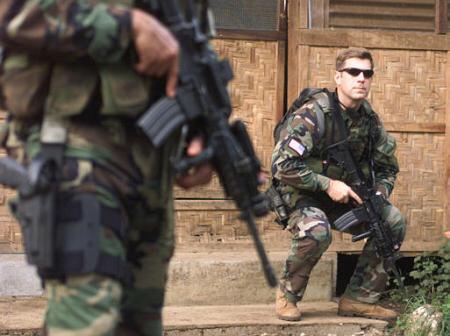
The PBPV has seen action from the Kosovo war, up to early Global War on Terror. PBPV saw limited uses in Afghanistan and Iraq, however, it notably saw action in Operation Enduring Freedom-Philippines when the 1st Special Forces Group (SFG) deployed to Philippines on January 2002 under the umbrella of Global War on Terror. The Special Forces troops assisted the Philippine forces by providing them Counter-Terrorism training and supported their operations against Al Qaeda afflicted terror groups; while did humanitarian missions. PBPV was seen worn by 1st SFG’s CIF company on that deployment.

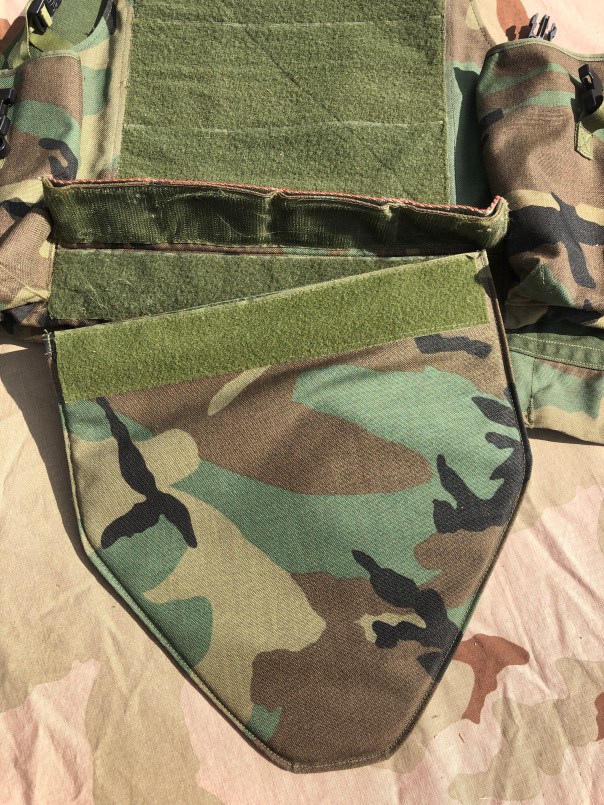
The body armor in the collection is rather unique; it has been modified by operator. The cummerbund was cut off and buckles were added in its place for convenience and ease of use. Additionally, two buckles were added on top chest to accommodate the chest rig made by AWS, inc. (I don’t own one but actively hunting for one). The such modification was typically associated with CIF companies.

(Comment to airsofters and impressionists: Just because there are modified examples, it doesn’t mean you should cut up and modify the original PBPV cummerbund! Those are rare enough already.)
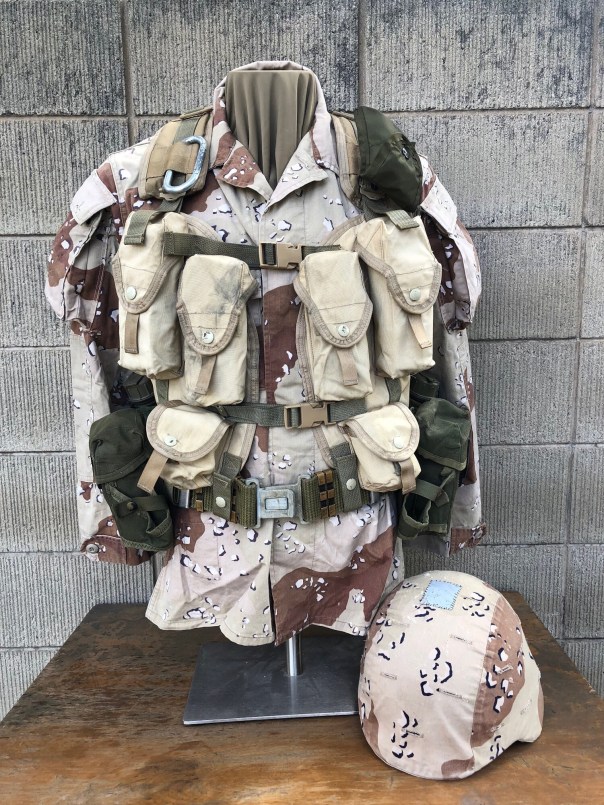
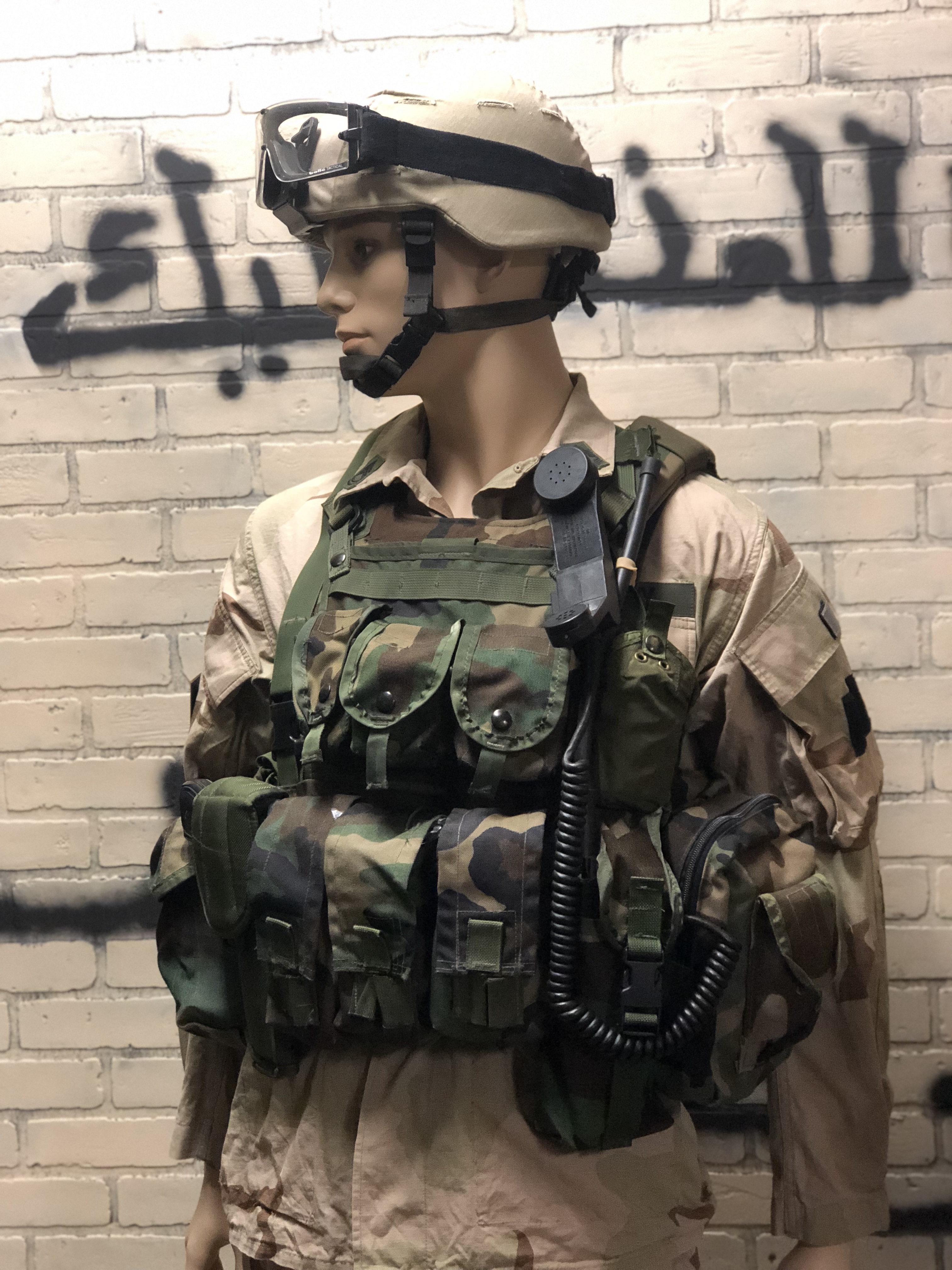
American Body Armor Tan LCS-84 Load Bearing Vest.

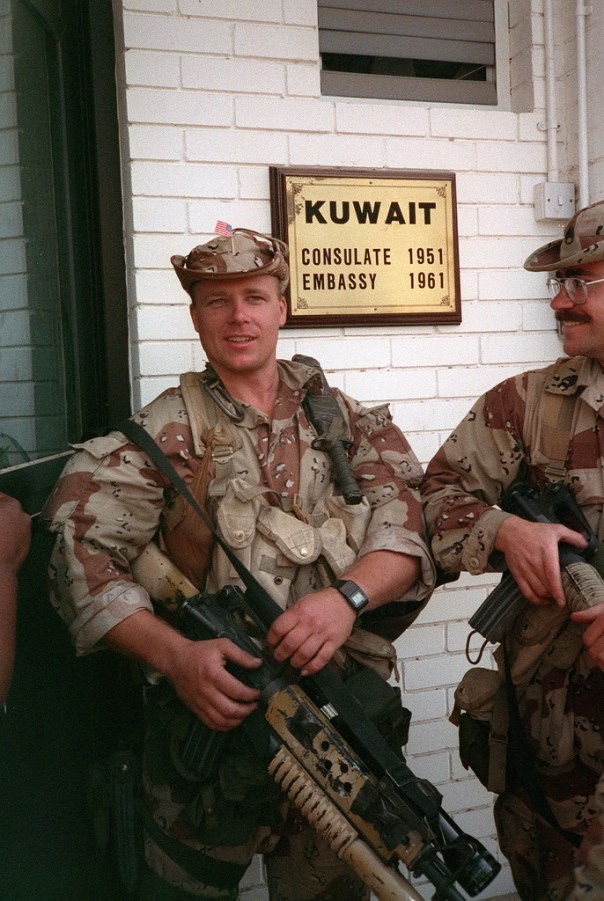
The Load Bearing Vest (LBV) in desert tan color was issued to US. Army Special Forces and Delta Force.  The LBV at the time was considered as high speed, and was issued exclusively to US. Special Operation Forces, and very few conventional units had the luxury. Those LBVs were only available in woodland camouflage pattern. In early 1980’s US. Military started to get more involved with the Middle East, as a result they needed LBVs in desert tan to match the environment, so limited number of tan LBVs were made by the manufacturer, American Body Armor. It was first seen used by US. Army Special Forces and Delta Force during Operation Desert Shield/ Operation Desert Storm (The 1991 Gulf War). The ABA LBVs eventually saw some action in Afghanistan after September 11, 2001 (Operation Enduring Freedom) with the 5th Special Forces Group. Few men from the ODA 595 (Well-known as “Horse Soldiers” or “12 strong” from book and film) were seen wearing them, based on actual photos.

This is a unique case where Desert Storm display is included on this page due to the long history of this piece of gear.

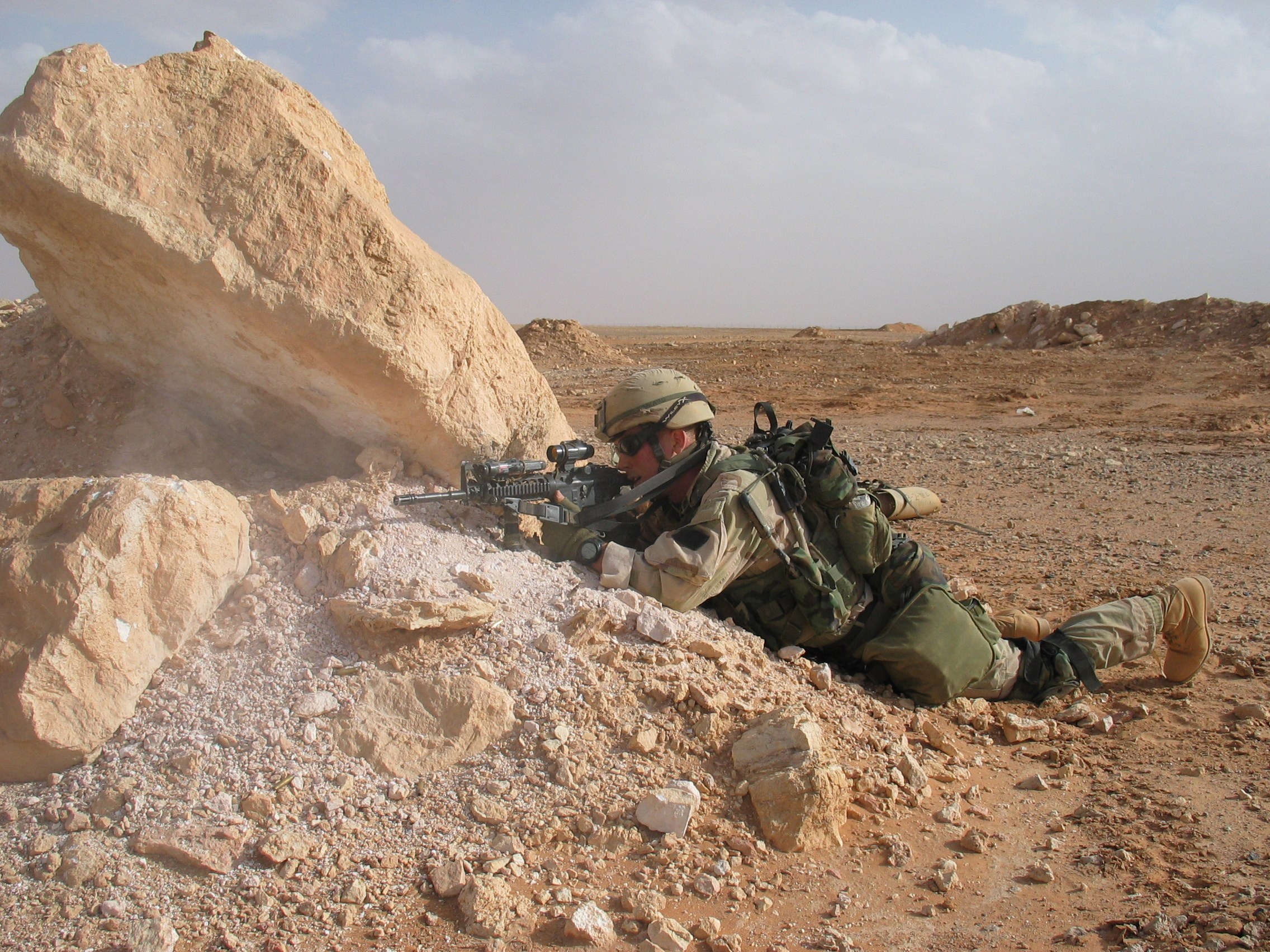
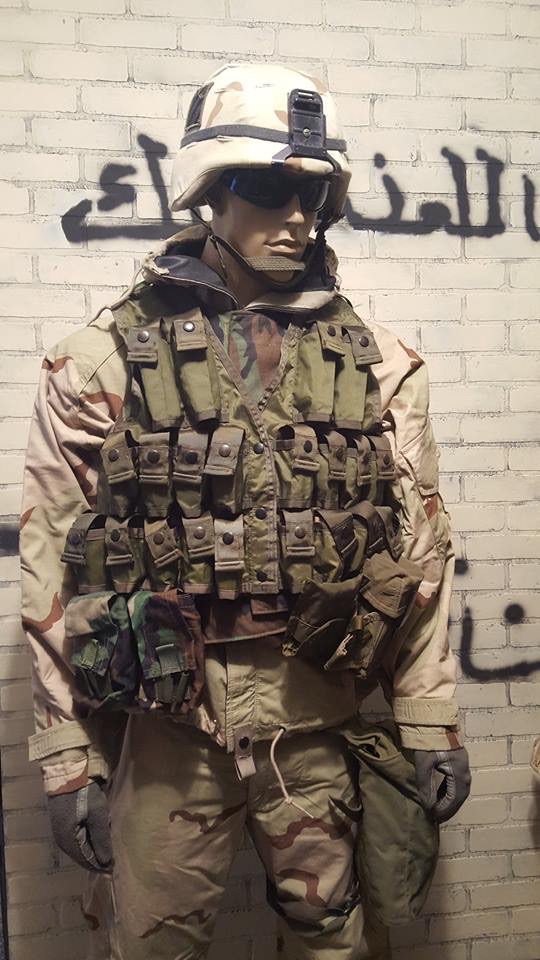
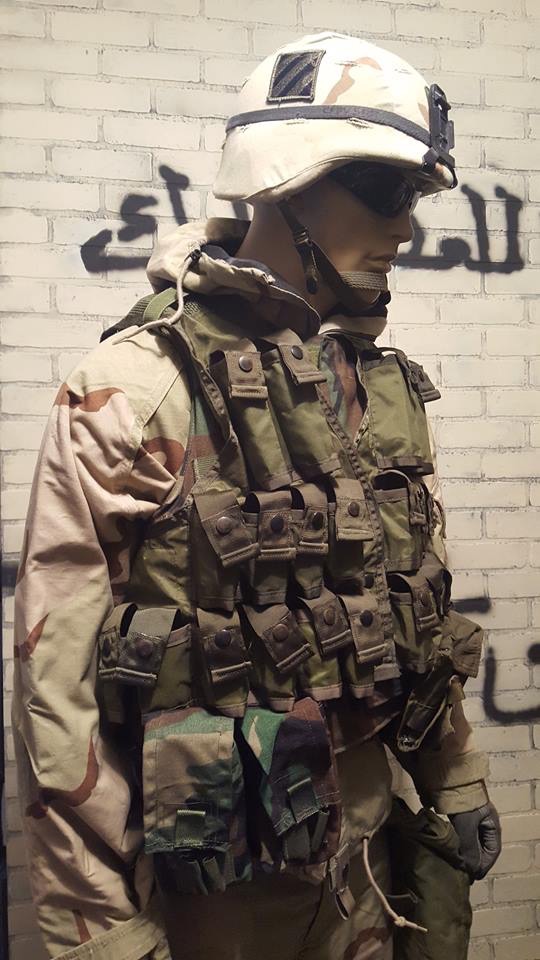
2003 Invasion Of Iraq: 3rd Infantry Division; grenadier


The exhibit of 3rd Infantry Division grenadier during the invasion of Iraq in 2003. His main weapon (Not shown) would’ve been M203 (40mm grenade launcher) mounted on M-16A4 and in some cases, M4. 

In this timeframe soldiers had mixture of new and old equipment system as US. Military had started transitioning from ALICE or LC-2 which was issued since 70’s and at time, new MOLLE equipment. He is wearing a JLIST (or known as MOPP) suit over his standard Desert Combat Uniform with leg pouch containing gas mask in an event Chemical (WMD) attack occurs.

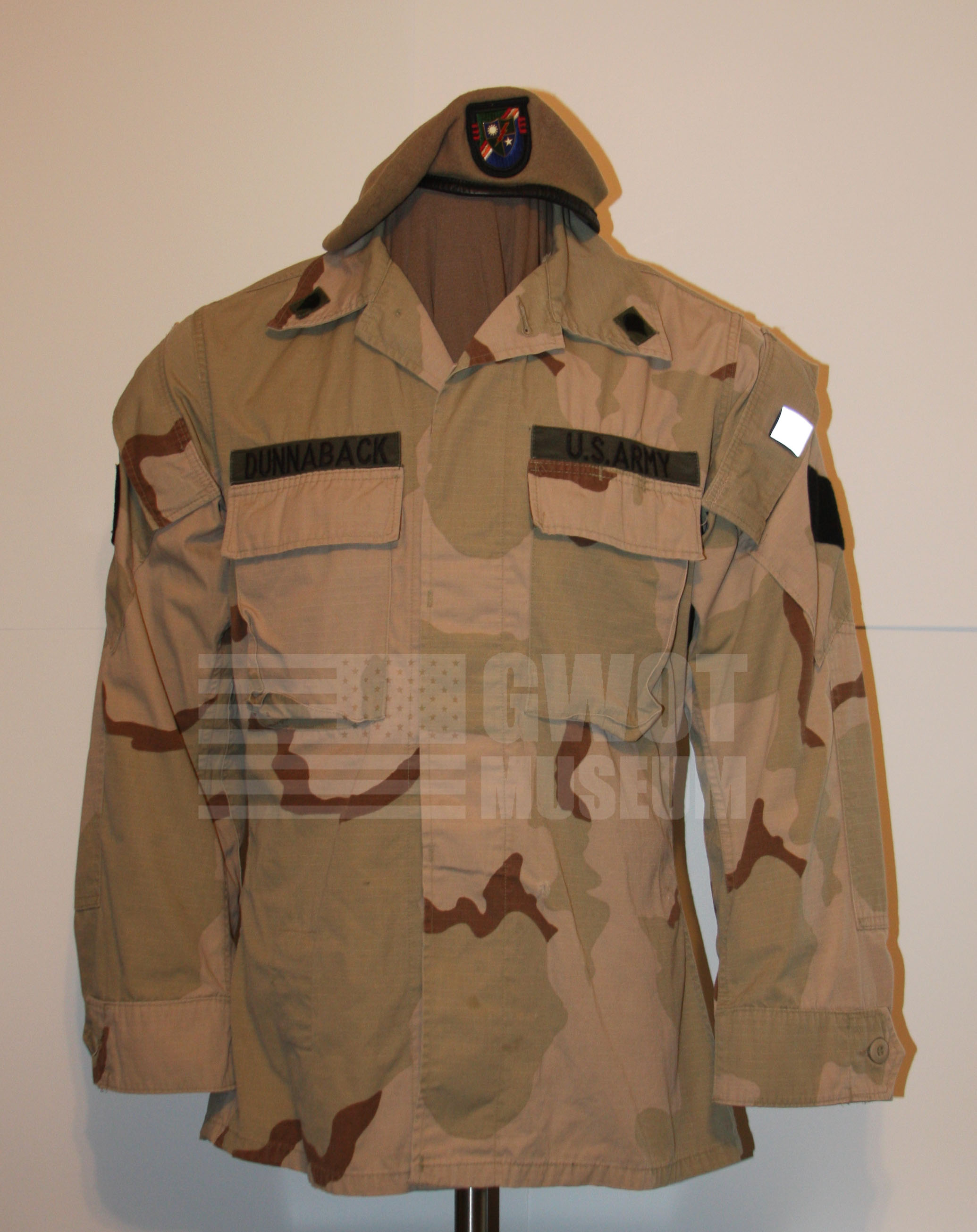
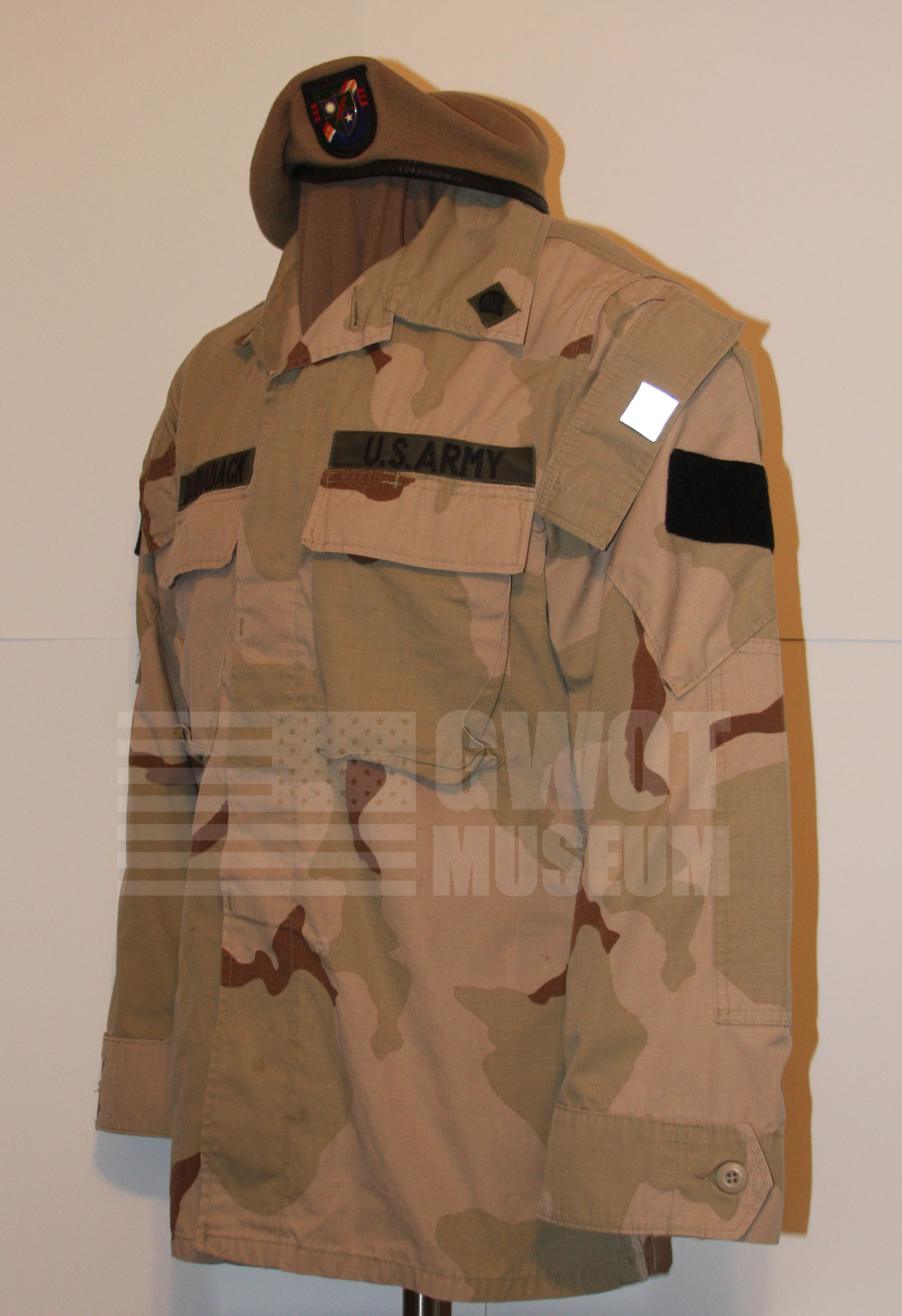
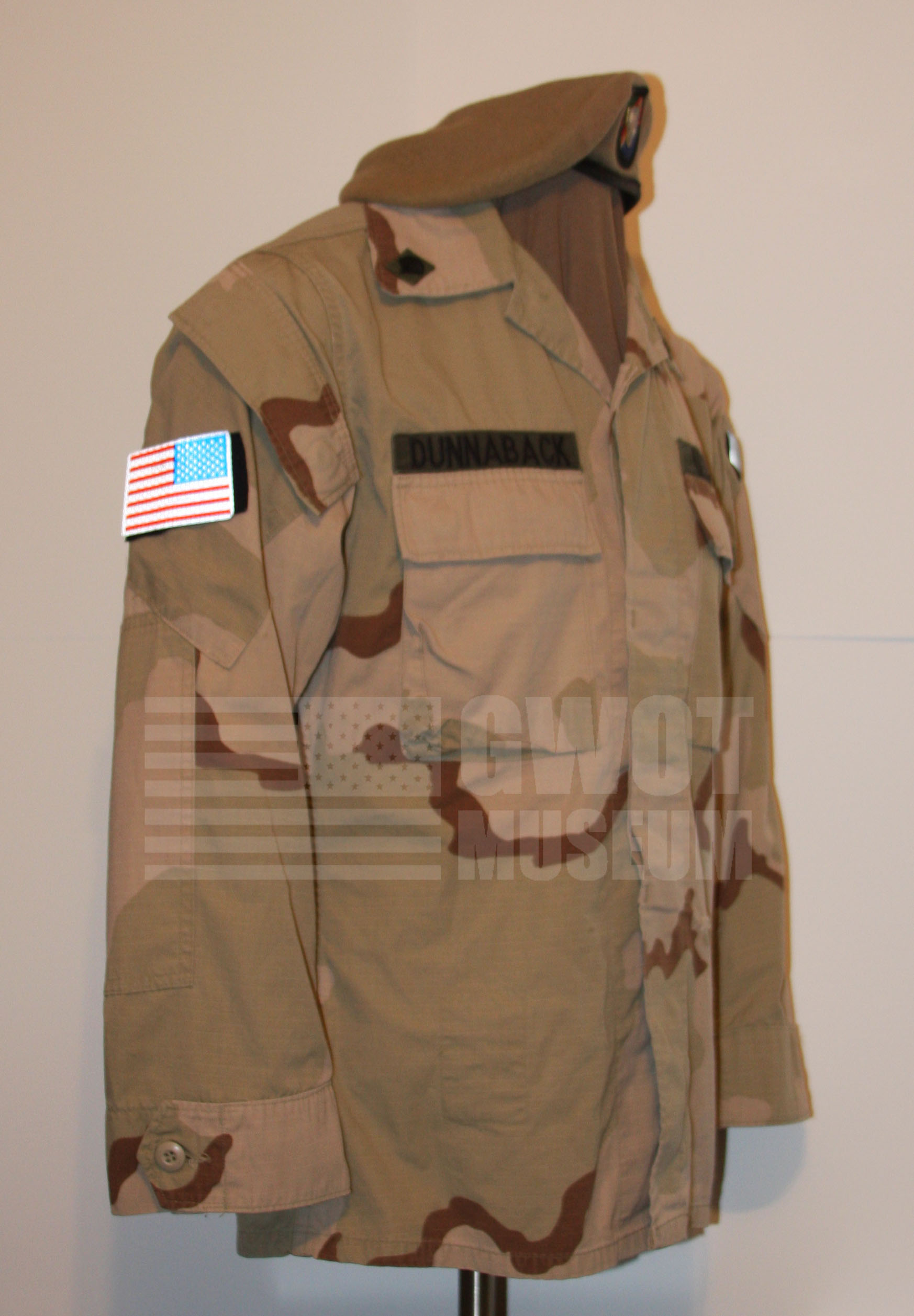
Modified Desert Combat Uniform and Beret of the 75th Ranger Regiment ’02-’05

04a375025zg4mk-48-mod-0-hrRanger mod 2 Ranger mod Ranger mod 1IMG_7912

The 75th Ranger Regiment, unlike to other US. Army units, lacked the shoulder sleeve insignia on their deployment uniforms. The regiment had everyone modify their desert combat uniform to Rangers’ specifications (Lower pockets moved to upper sleeves, with black velcro rectangles sewn on pockets with additional of small velcro square for the glint (reflective) square. Typically Rangers would have worn either reflective or standard US flag patch on right sleeve. Callsign patch with infrared/reflective numbers/letters would’ve be mounted  on left sleeve velcro (not shown). The reflective/infrared patches were used to aid with identification of friendly or foe while wearing a night vision goggles during night operations.

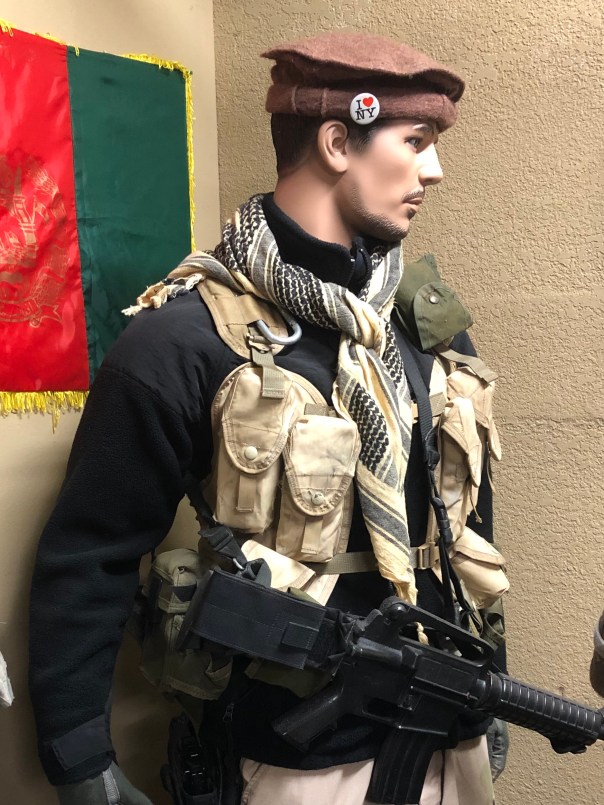
US. Army Special Forces, Kabul, Afghanistan 2001-02

After the attack on the World Trade Center on September 11, 2001, US. Army Special Forces were one of few first US units to be deployed to Afghanistan, at the time, under control of Taliban regime, who offered the safe haven to Al Qaeda, the terrorism group responsible for the 9/11 attack. The Special Forces worked closely with Northern Alliance Fighters (predecessor to Afghan National Government, the alliance consisted of multiple different tribes who rivaled Taliban and Al Qaeda). Special Forces soldiers needed to blend in with the local population and Alliance fighters, so instead of their standard issue equipment and accessories, they opted for equipment/ clothes/accessories popular in Afghanistan such as Chinese made AK chest rig, traditional pakol hat, and shemagh. They even grew beards.