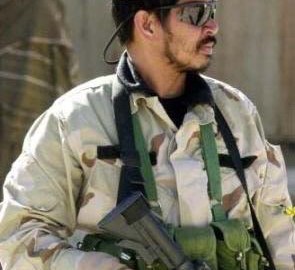
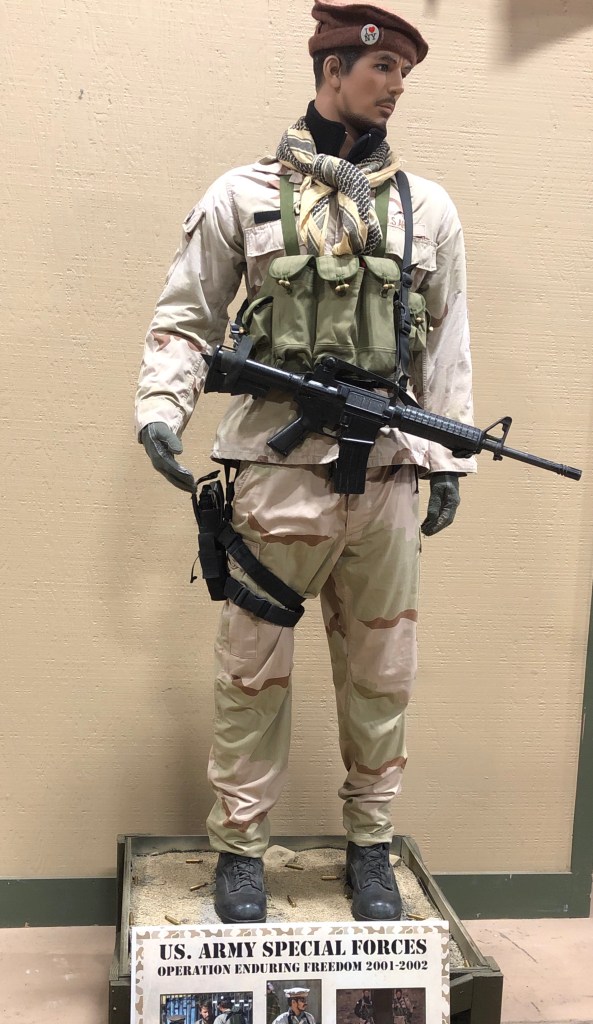
The display is currently on loan to American Armory Museum for their Operation Enduring Freedom exhibit.
Anti-Taliban leader Gul Agha Sherzai’s Pashtun force liberated Kandahar from Taliban’s control in late 2001. There were still pockets of Talibans and (foreigners) Al Qaeda fighters throughout the city. Sherzai’s forces captured few wounded hard core Al Qaeda fighters, who were then brought to Mir Wais hospital for treatments. On December 7, 2001 nine Al Qaeda fighters overpowered their captors, armed and barricaded themselves in a wing of hospital, besieged it. Al Qaeda fighters handed over two of their severely wounded fighters who weren’t able to fight, to Sherzai’s forces. One of fighters committed suicide by blowing up himself with a grenade. Six Al Qaeda fighters remained.
US. Army 5th Special Forces Group (Airborne)’s ODA 524 team had arrived in Kandahar just two days earlier to replace another team, ODA 574 due to heavy casualties from accidental friendly air strike incident. When ODA 524 arrived on scene, Pashtun leader Sherzai insisted that Americans could not enter the Mir Wais hospital but insisted they train and prepare Sherzai’s own force for assault. With the siege ongoing, the ODA trained the 15 best fighters selected from Sherzai’s force for assault. For a few weeks, these Pashtun fighters were trained in urban warfare and Close Quarter Battle.
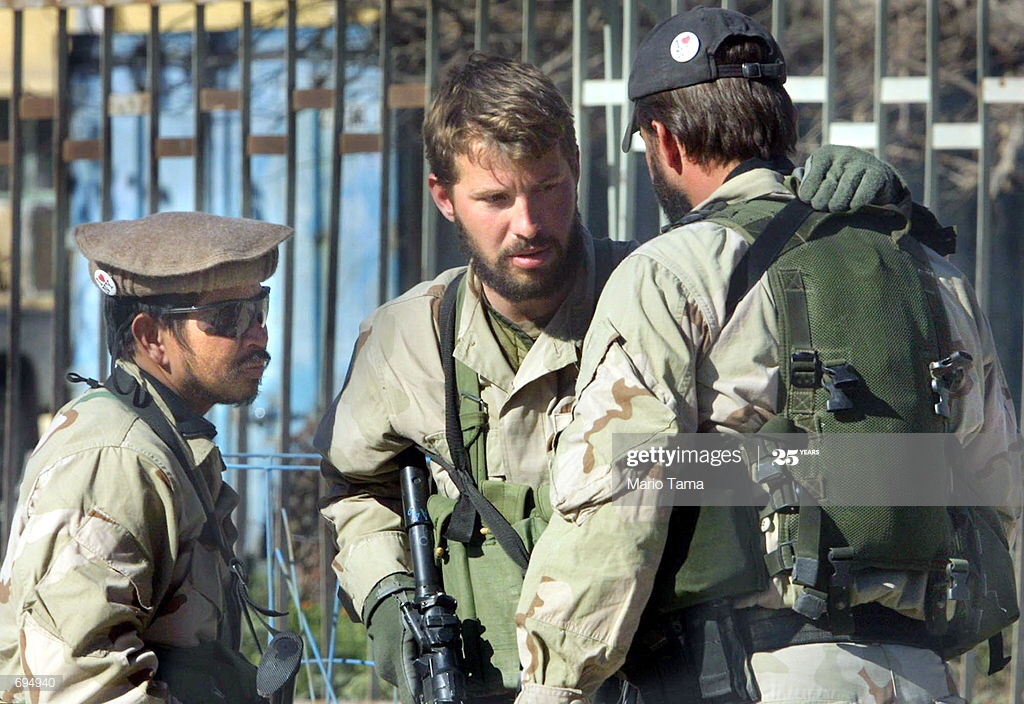
The ODA emplaced and blew breaching charges on the hospital wall creating an entry point for Sherzai’s assault force. The breaching caught Al Qaeda fighters off guard however, Sherzai’s assault force moved too slowly, allowing Al Qaeda fighters to recoup and put up a heavy resistance. At one point during the assault, a grenade blew up wounding multiple Pashtun assaulters, forcing them to retreat. On the second assault attempt, the remaining Pashtun assaulters were no longer motivated, requiring the ODA to step in. The ODA conducted this second assault themselves. After tossing multiple grenades and heavy gunfight, they successfully took down all the six Al Qaeda fighters. The men of ODA 524 ended a 50 days siege without taking casualties.
The two severely wounded fighters were treated and transferred to United States’ Guantanamo Bay Naval base in Cuba for the high security detention camp controlled by Joint Task Force- Guantanamo (JTF-GTMO).
Image source: AP photo and the BBC News article.
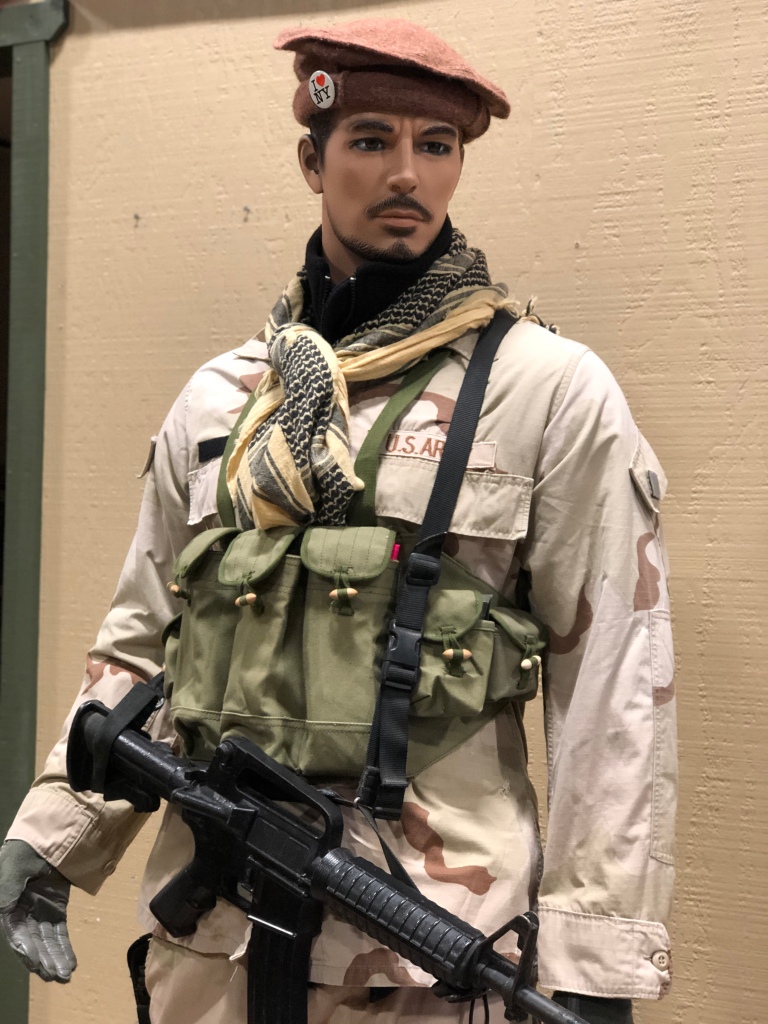
The equipment on the mannequin display: Pakol hat and Chinese made “Chicom” chest rig commonly worn by Afghans; also worn by Special Forces soldiers to blend in their allied fighters and local population. The “I love NY” pin was worn by ODA members as a tribute to 9/11. The desert camouflage uniform (DCU) was modified by relocating pockets to sleeves for ease of access while wearing vest or chest rig. Strips of Velcro were added so branch/name tags can be removable for anonymous reason and Velcro squares on sleeves were for reflective/IR squares with purpose to distinguish from friendlies to foes. Under the modified DCU is Extreme Cold Weather Clothing System (ECWCS) fleece jacket.
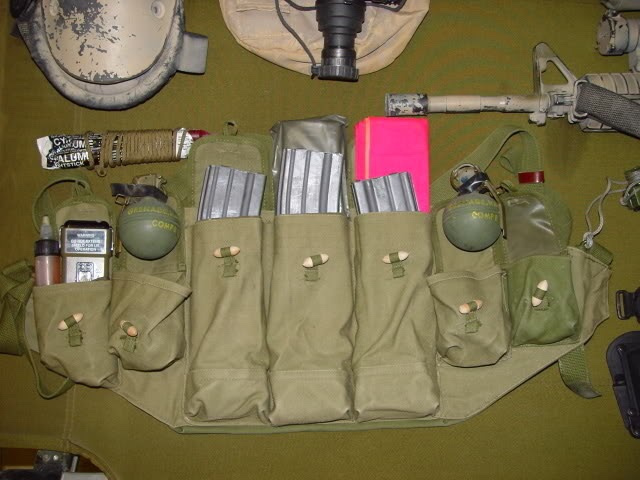
Image source: Unknown/ Open source
Sources:
-Weapons of Choice; ARSOF in Afghanistan
-http://news.bbc.co.uk/2/hi/south_asia/1786011.stm


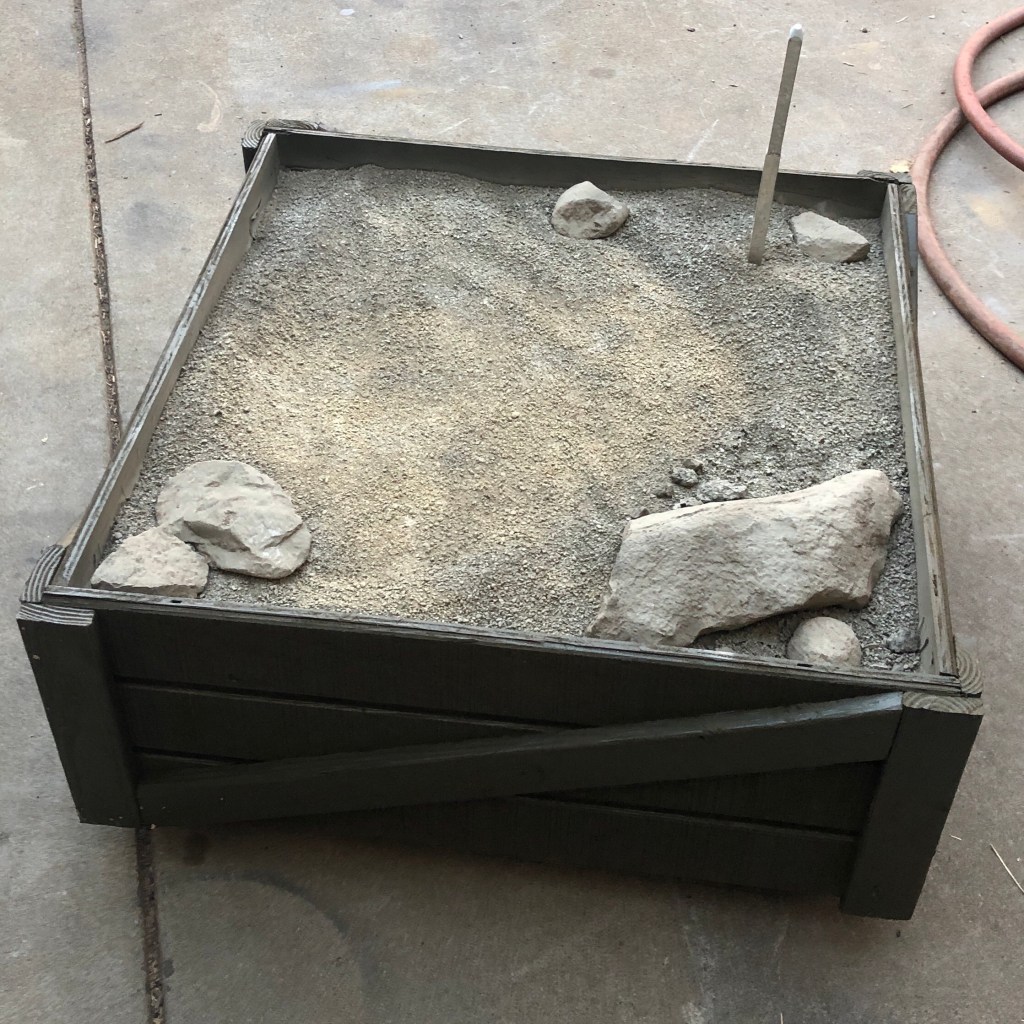
 GWOT museum
Great display. Was really fun to go through your collection! Keep it up!
Thank you, I’ve been following your page as well! It’s neat to see all the deployment artworks.