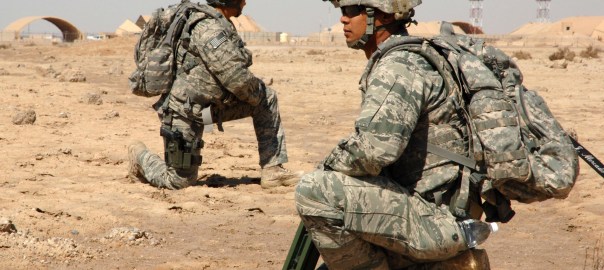
Category Archives: US. Air Force

USAF uniform: Airman Battle System, Ground

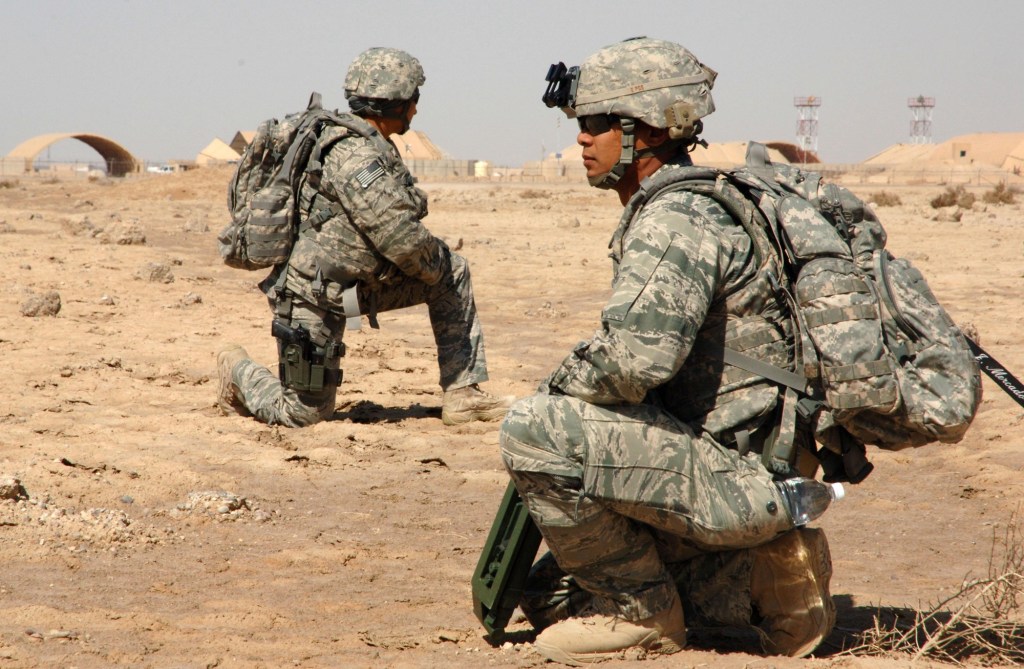
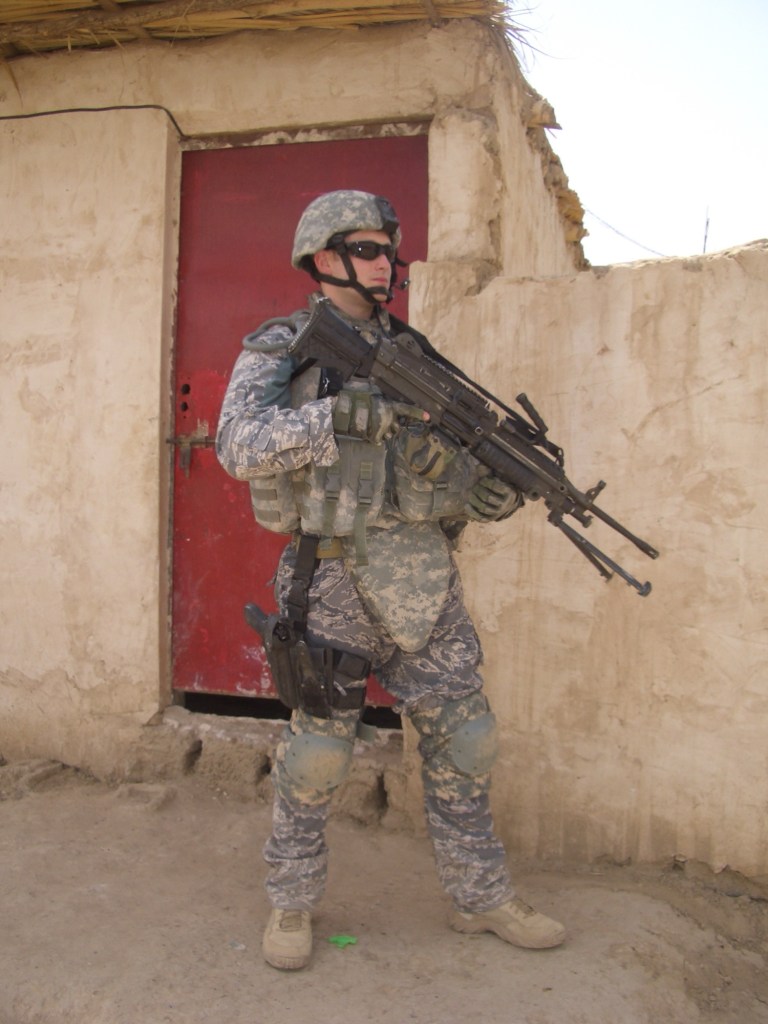
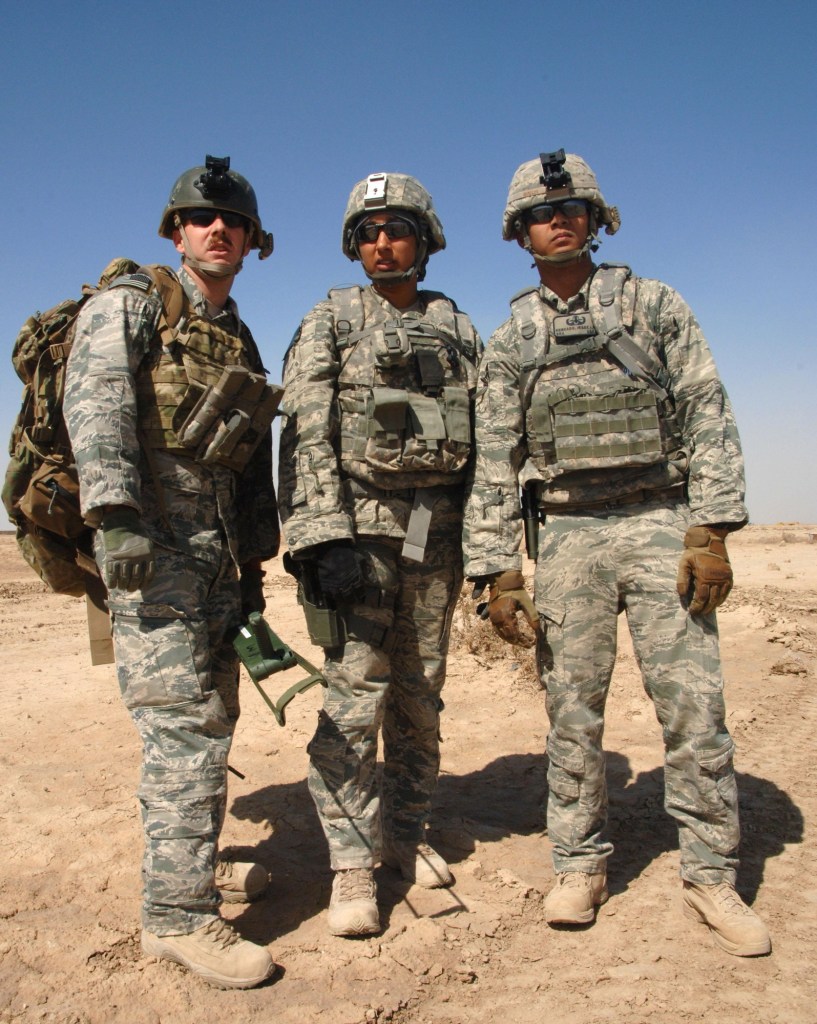
A battlefield Airmen stands guard wearing the new Airman Battle System-Ground ensemble. The ABS-G provides battlefield Airmen with fire resistance and tactical integration with body armor. Distribution will begin in February 2009, and it will most likely be in testing phase for 18 to 24 months. (USAF public domain photo)

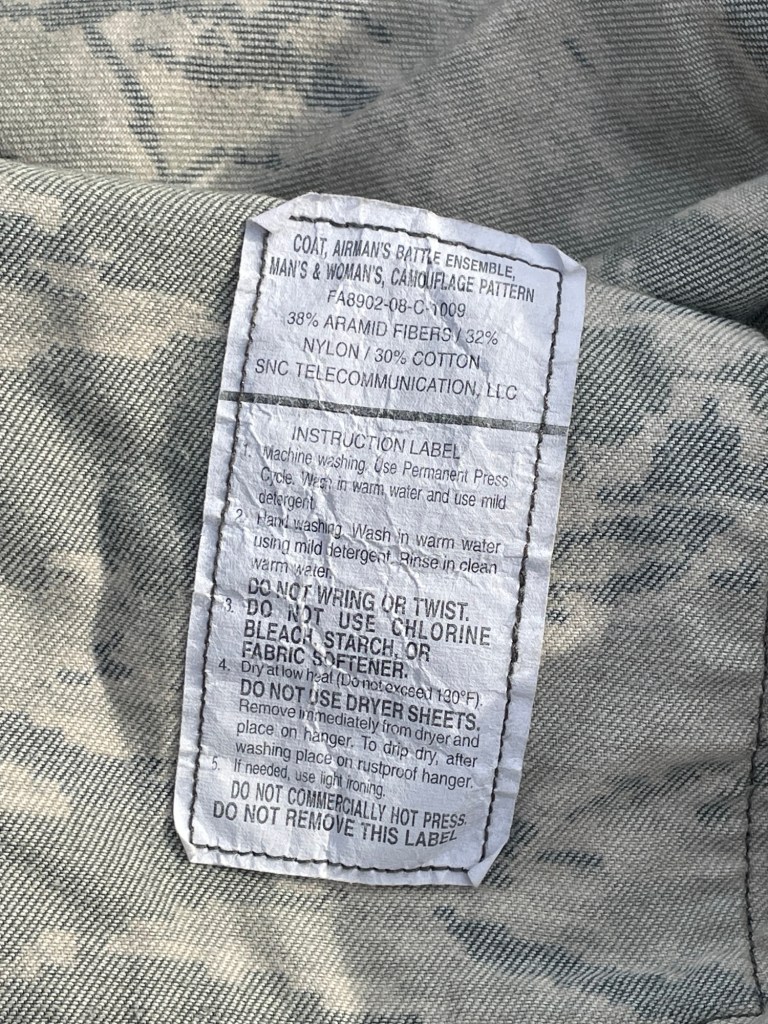
The Airman Battle System Ground (ABS-G), was a combat uniform used by certain members of the United States Air Force during the wars in Iraq and Afghanistan. The uniform itself was called the Airman’s Battle Ensemble, which was one part of the larger Airman Battle System Ground program.
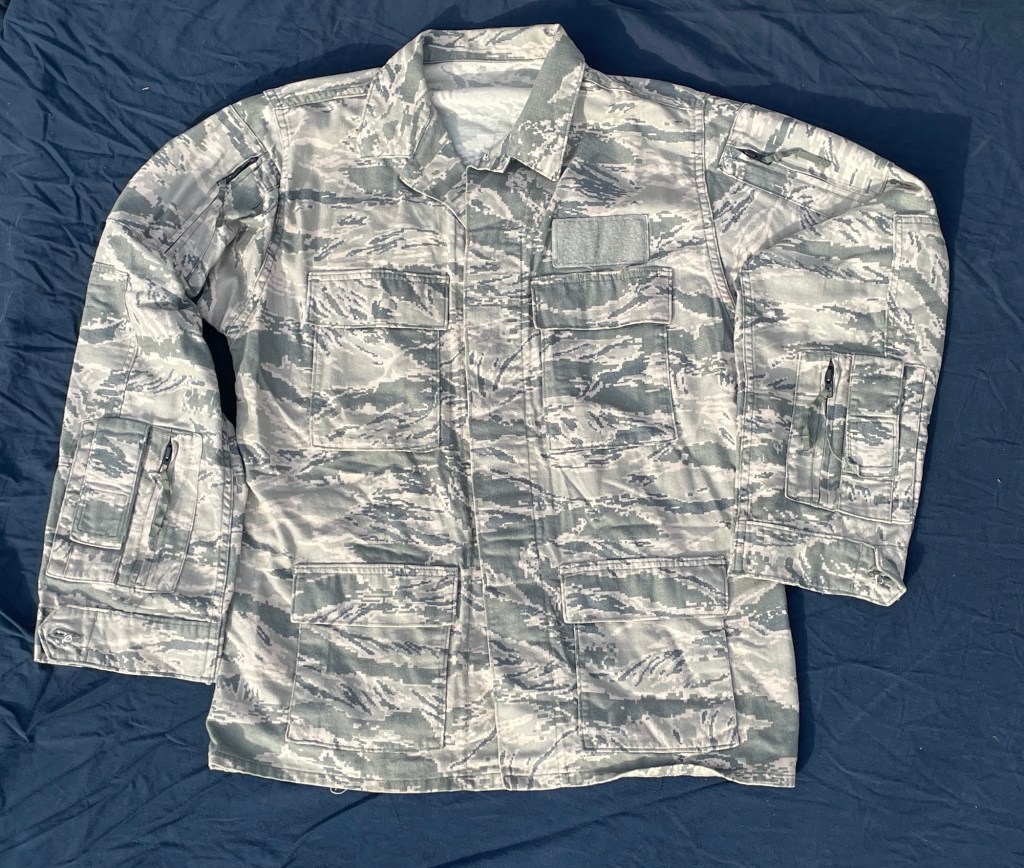
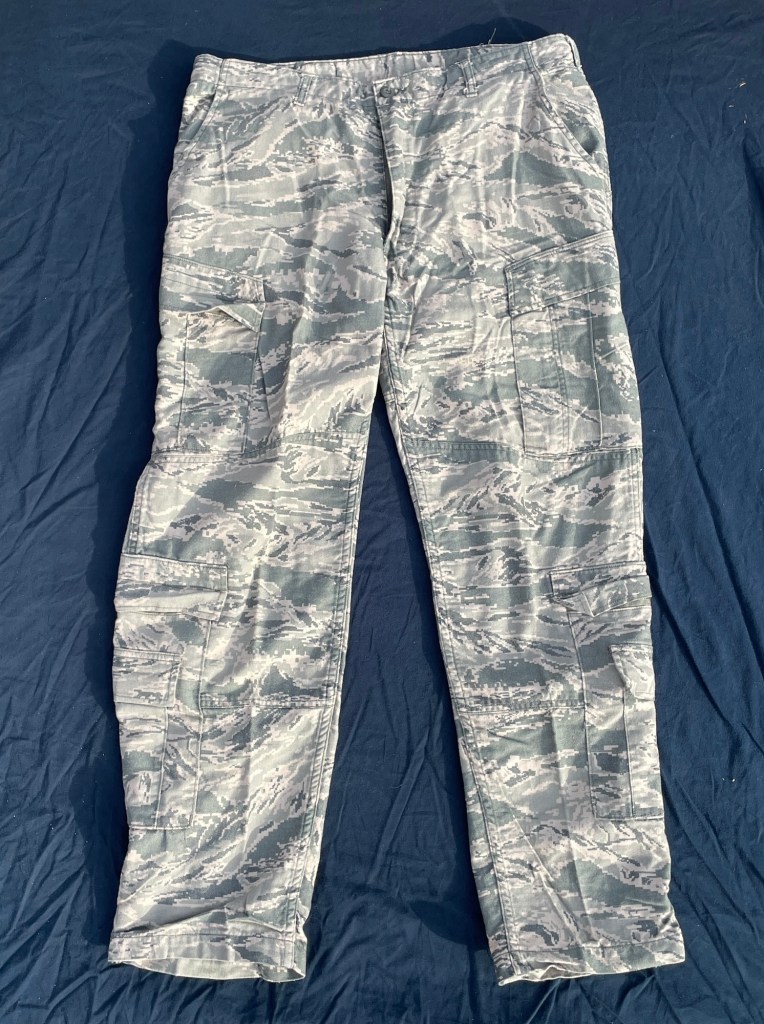
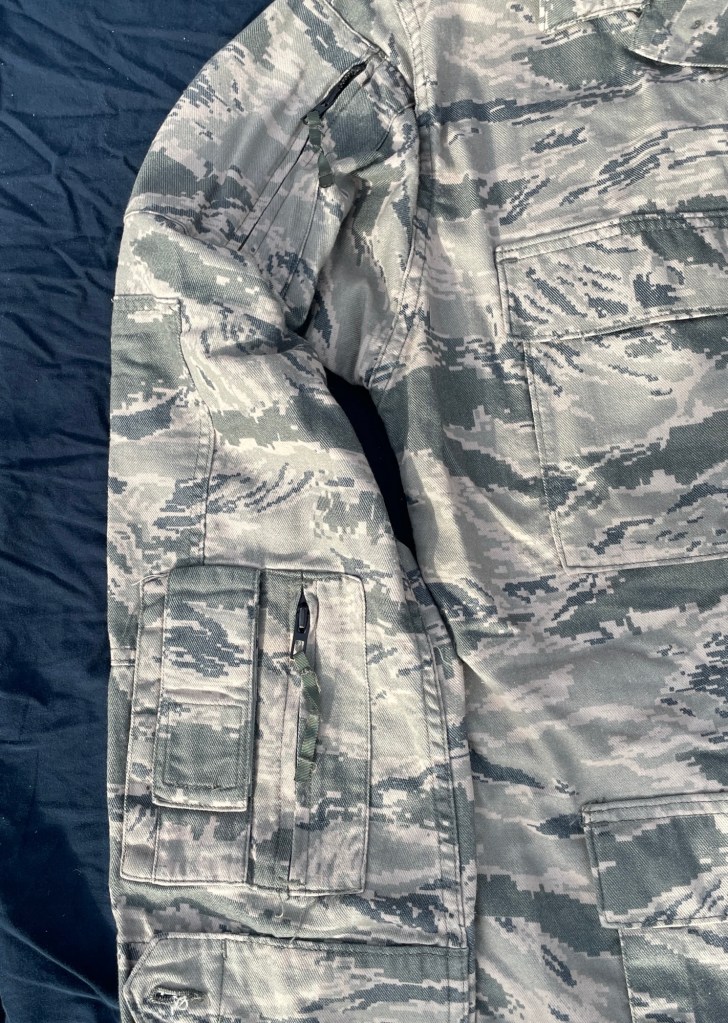
The Air Force created the ABS-G around 2008 because the standard Airman Battle Uniform (ABU) was not ideal for combat operations. Many Airmen serving in dangerous areas needed uniform that was more comfortable under body armor and had better pocket locations so design was borrowed from flight suits. Leg pockets were easier to reach while sitting inside vehicles such as Humvees, and zippered sleeve pockets could still be accessed while wearing body armor. Battlefield Airmen also needed better protection from fire and heat because of the growing threat of roadside bombs and improvised explosive devices.
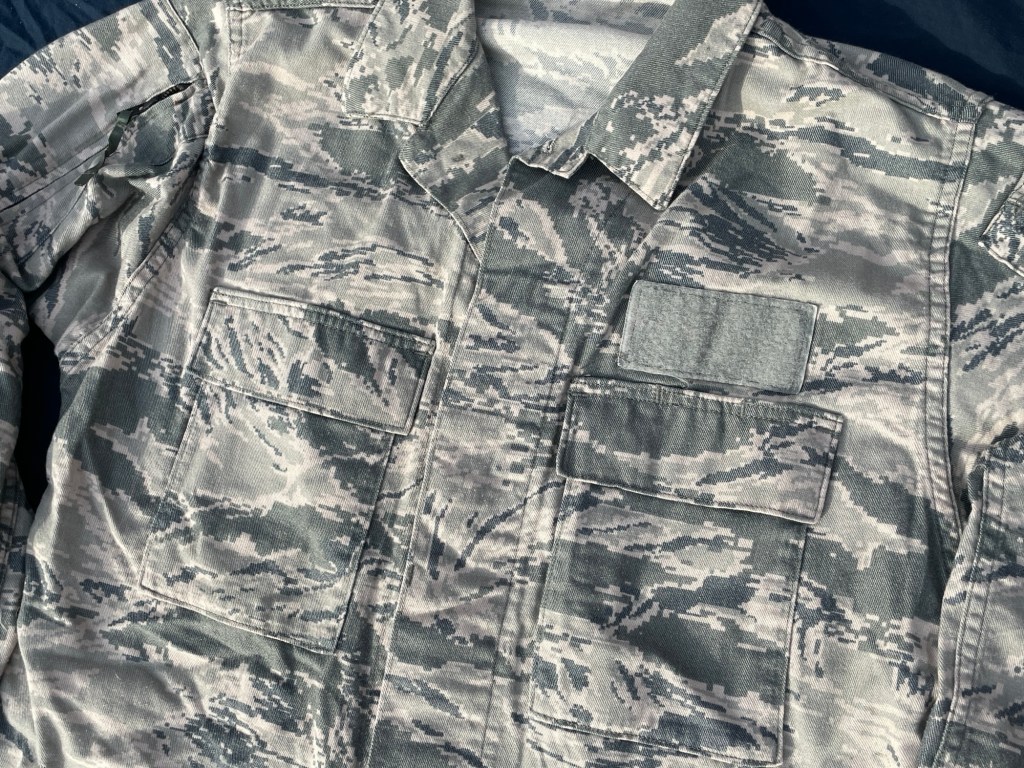
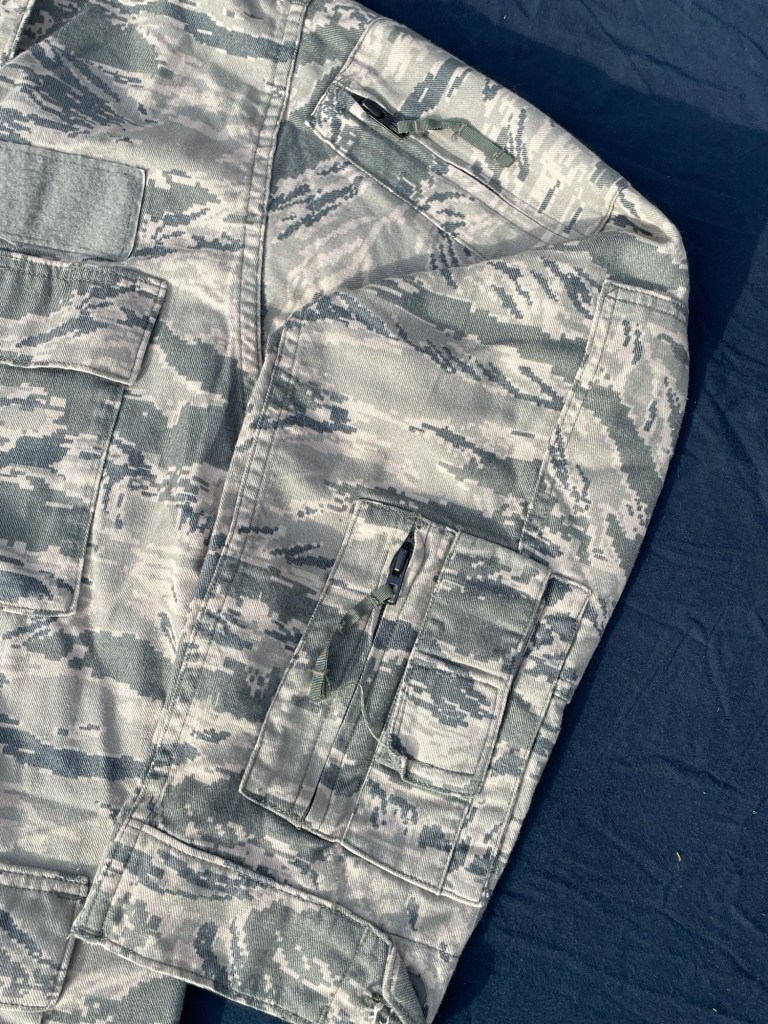
The ABS-G was issued beginning in 2008 to Airmen who worked outside the safety of large bases. It was only issued to Security Forces, Explosive Ordnance Disposal teams, Tactical Air Control Party members, Pararescue Jumpers, and other “battlefield airmen” deploying to Afghanistan and Iraq. The uniform used the same “universal camo” digital tiger stripe camouflage pattern as the ABU, but it was made from flame resistant (FR) materials and had a more practical design for use with body armor and equipment.
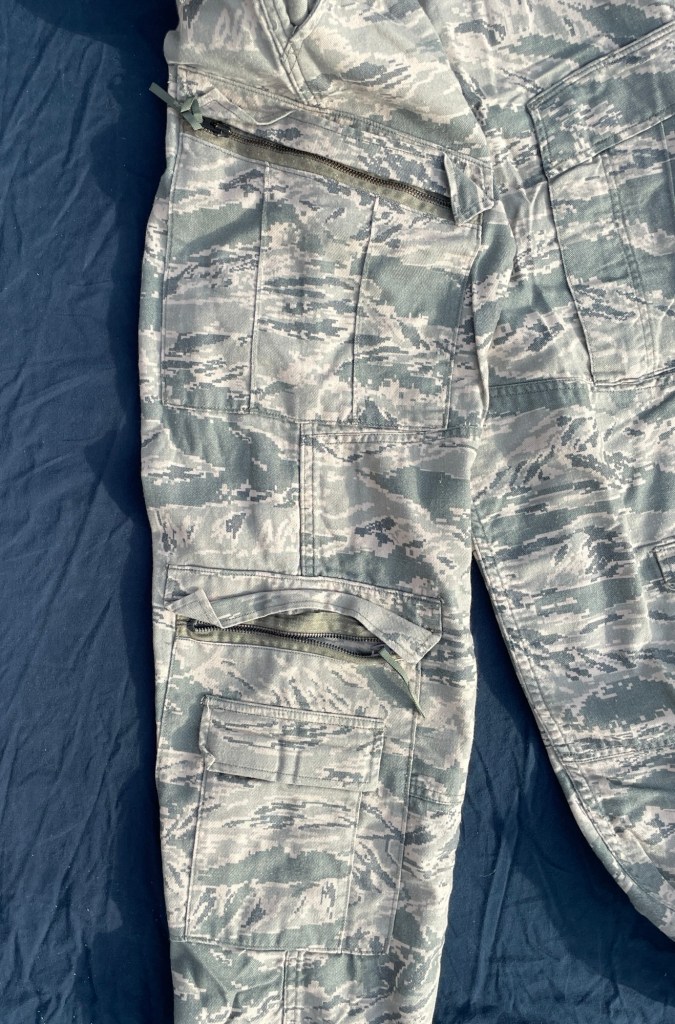
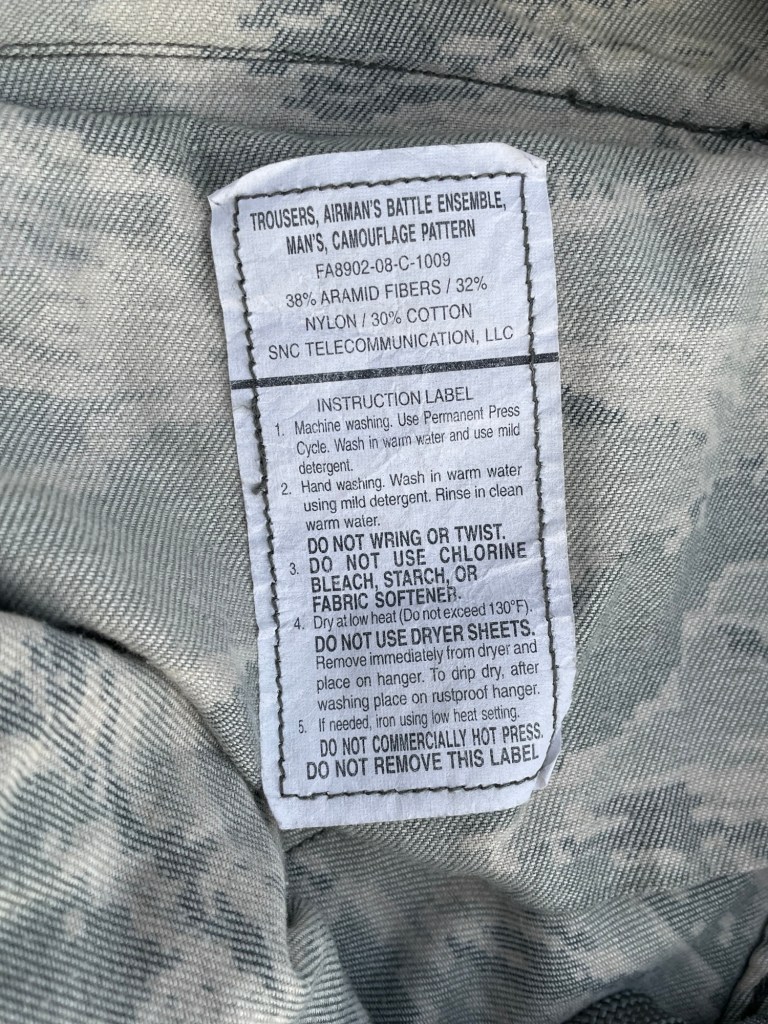
The ABS-G was never widely issued across the entire Air Force. Only a small number of Airmen received it, and it saw service for a relatively short time. It was controlled item, not available in PX or commercially for private purchase. Air Force switched to flame resistant Operational Camouflage Pattern (OCP or as widely known, multicam), which replaced both the ABS-G and ABU. This makes the ABS-G one of the shortest serving and most limited issue Air Force uniforms of the GWOT.

Source:

United States Air Forces Central Command. “ABS-G: New Gear Integrates Function, Capabilities for Combat Airmen.” Air Forces Central News, 2008. https://www.afcent.af.mil/News/Article/221458/abs-g-new-gear-integrates-function-capabilities-for-combat-airmen/
USAF PJ Air Rescue Vest

USAF Pararescue Jumpers (PJs) are airmen specialized in rescuing and recovering downed pilots in combat zones. As qualified medics, they also jump in the hot zones to provide medical assistances to troops. Because of those kinds of missions, they had requirements for load bearing vest (LBV) that could carry a lot of ammo, medical equipment, and various of rescue tools. To fill in this requirement, Eagle Industries created a specialized LBV, the Air Rescue Vest.

The vest is displayed with a DCU that came from a PJ. The veteran removed the name tape for privacy, however, the rest of patches are intact. You can see that he was Senior Master Sergeant and has badges to denote his qualifications: Master Aircrew Wings (Enlisted), Master Parachutist Wings, and Scuba.

Pararescuemen with the 301st Rescue Squadron return with a downed pilot from a successful rescue mission April 8, 2003 at a forward deployed location in southern Iraq during Operation Iraqi Freedom. – U.S. Air Force photo by Staff Sgt. Shane A. Cuomo

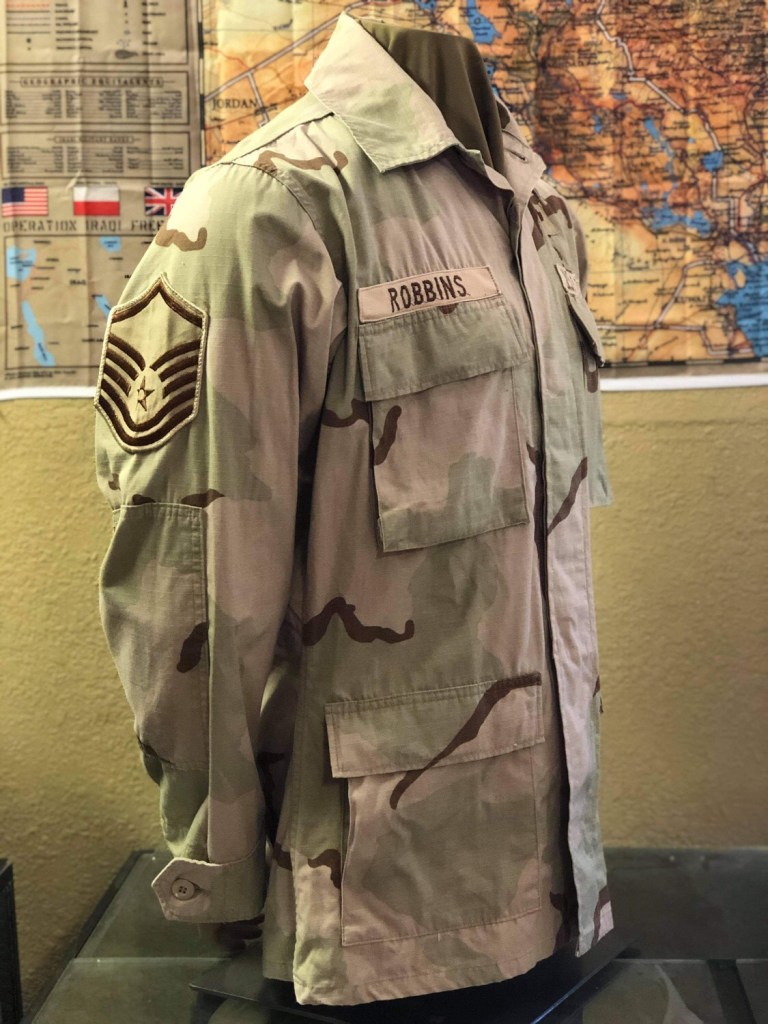
AFSOC Independent Duty Medical Technician, MSGT Robbins

The Air Force desert combat uniform (DCU) has enlisted aircrew wings and medical technician badge, Master Sergeant ranks, named to Robbins. By researching the name online, the history and face behind this DCU were found.

Msgt. Jason Robbins was an Independent Duty Medical Technician, assigned to the 1st Special Operations Support Squadron/Operational Support Medical Flight. His squadron falls under Air Force Special Operations Command. He was a flight IDMT aboard air rescue helicopters and aircrafts including MH-53 Pavelow and MC-130. His job involves assessing, evaluating, diagnosing and treating patients in flight during rescue operations.

In 2009, he become Combat Aviation Advisor with the 6th Special Operation Squadron (AFSOC). Later on, he would become Chief Medical Enlisted Force at AFSOC headquarters.

Based on his ribbons on the published photo, he has seen multiple deployments to Afghanistan and Iraq.

(Disclaimer: the information found on the individual is available publicly via published articles, so I believe no OPSEC nor privacy was violated).

Sources:

CMSGT Robbins’s story and image- https://idmtnewsletter.wordpress.com/2020/10/14/cmsgt-jason-robbins/amp/

Information about USAF IMDT- https://www.airforcemedicine.af.mil/News/Article/613263/idmt-not-your-regular-medics/

Factsheets about USAF Combat Aviation Advisor: https://www.af.mil/About-Us/Fact-Sheets/Display/Article/104605/combat-aviation-advisor/